
6 templates: Nonprofit
Six email templates for charities and nonprofit organisations: an appeal for a specific programme, a welcome email for a new donor, a quarterly report, a failed payment note, a report for people who gave a year ago, and a donation receipt.
Templates in this collection: 6
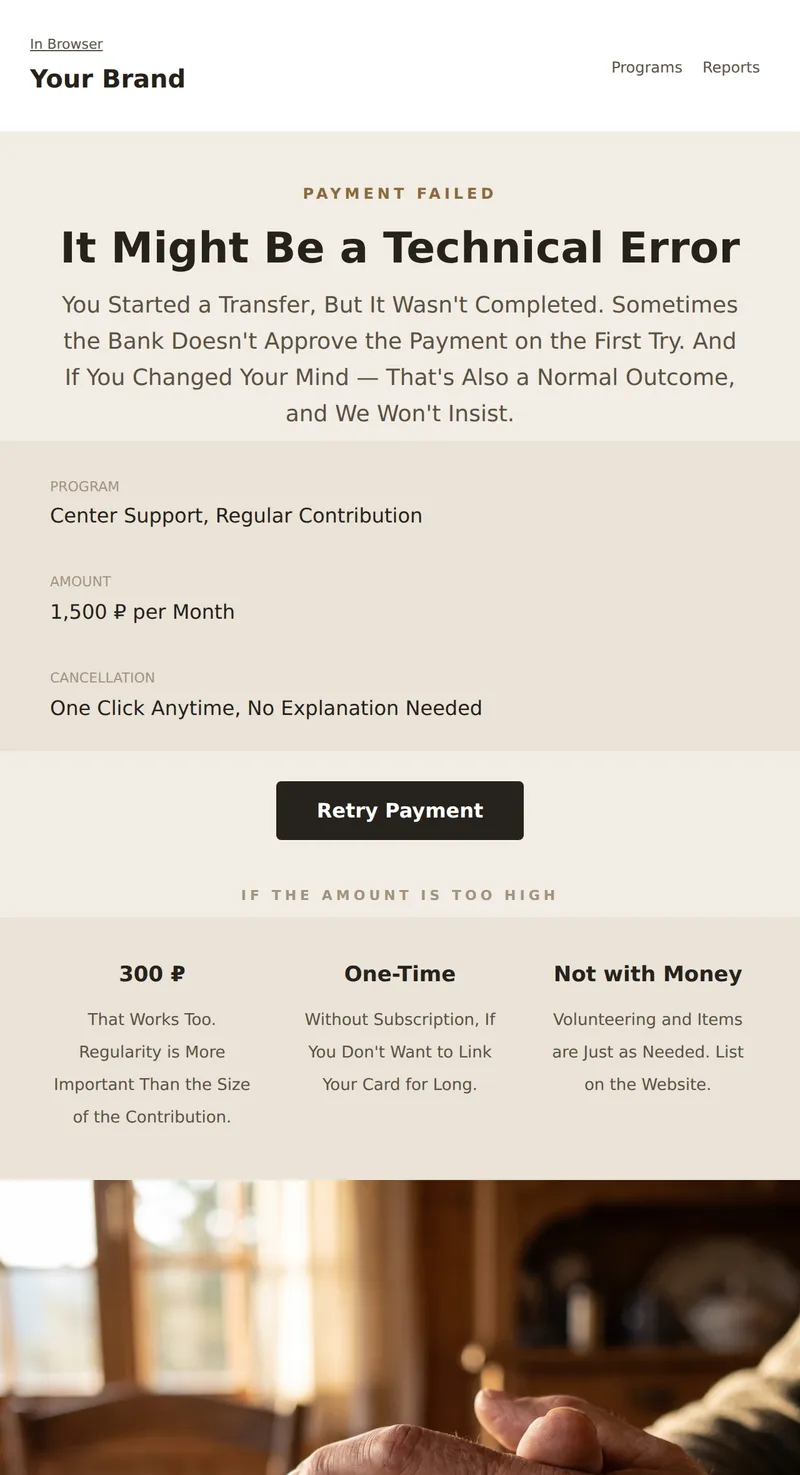
Email about Interrupted Payment: No Blame or Persuasion, Explaining that the Contribution Can Be Reduced or Canceled Anytime.
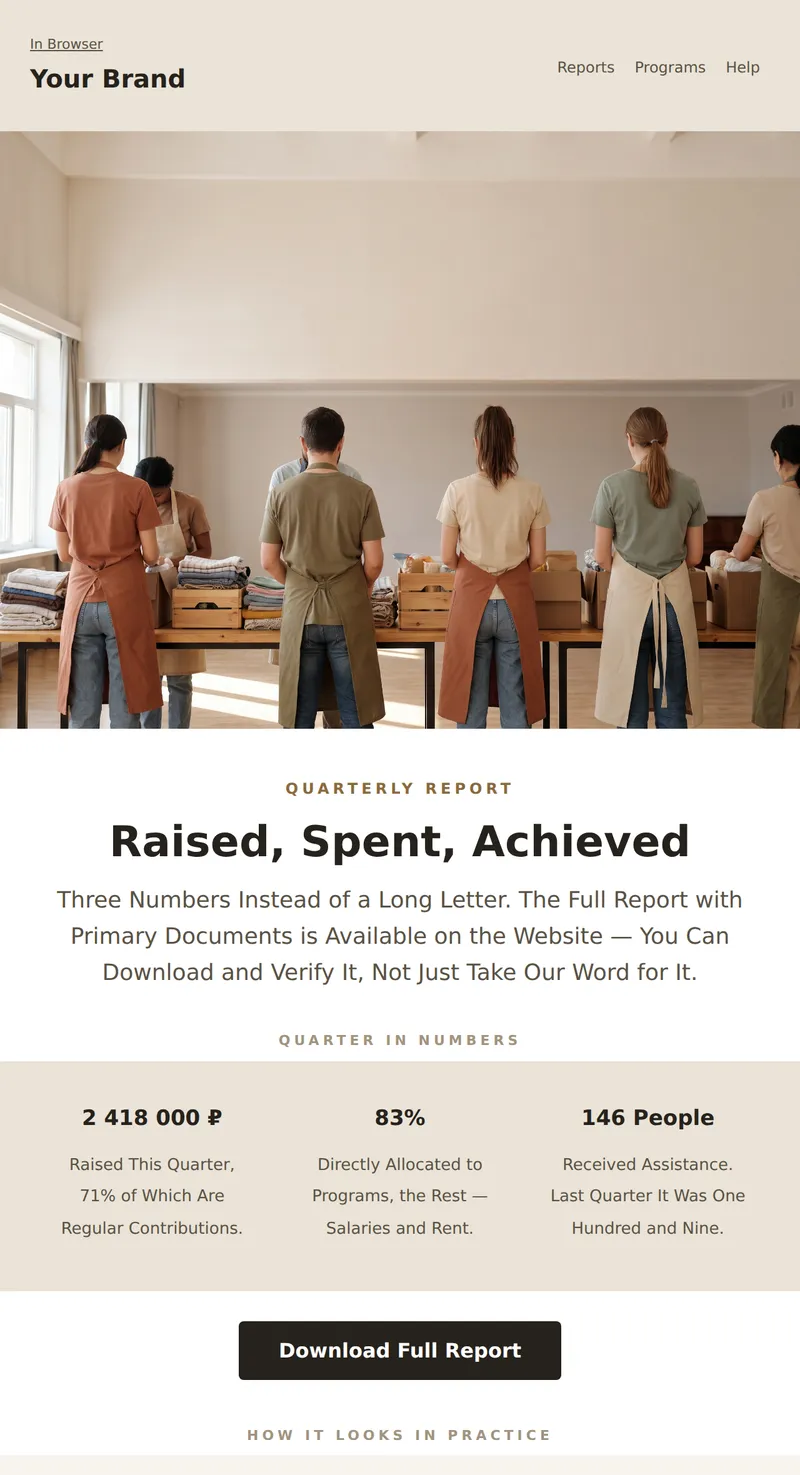
Quarterly Fund Report: Period Figures, Two Program Work Articles, and Ways to Help. Transparency Over Emotions.
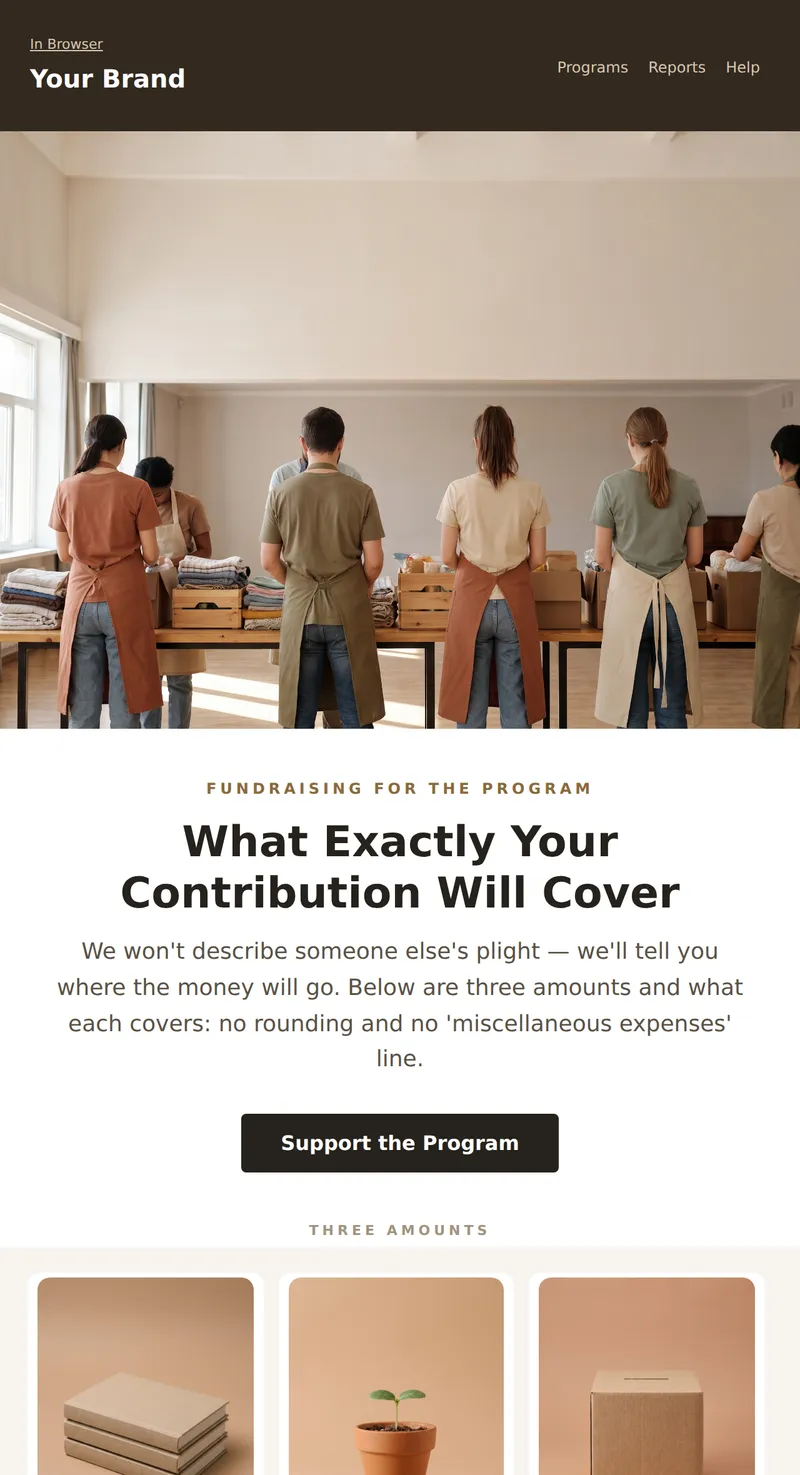
Fundraising Letter for the Foundation: Specific Program, Three Amounts with Breakdown, Where the Money Goes. No Guilt-Pressuring.
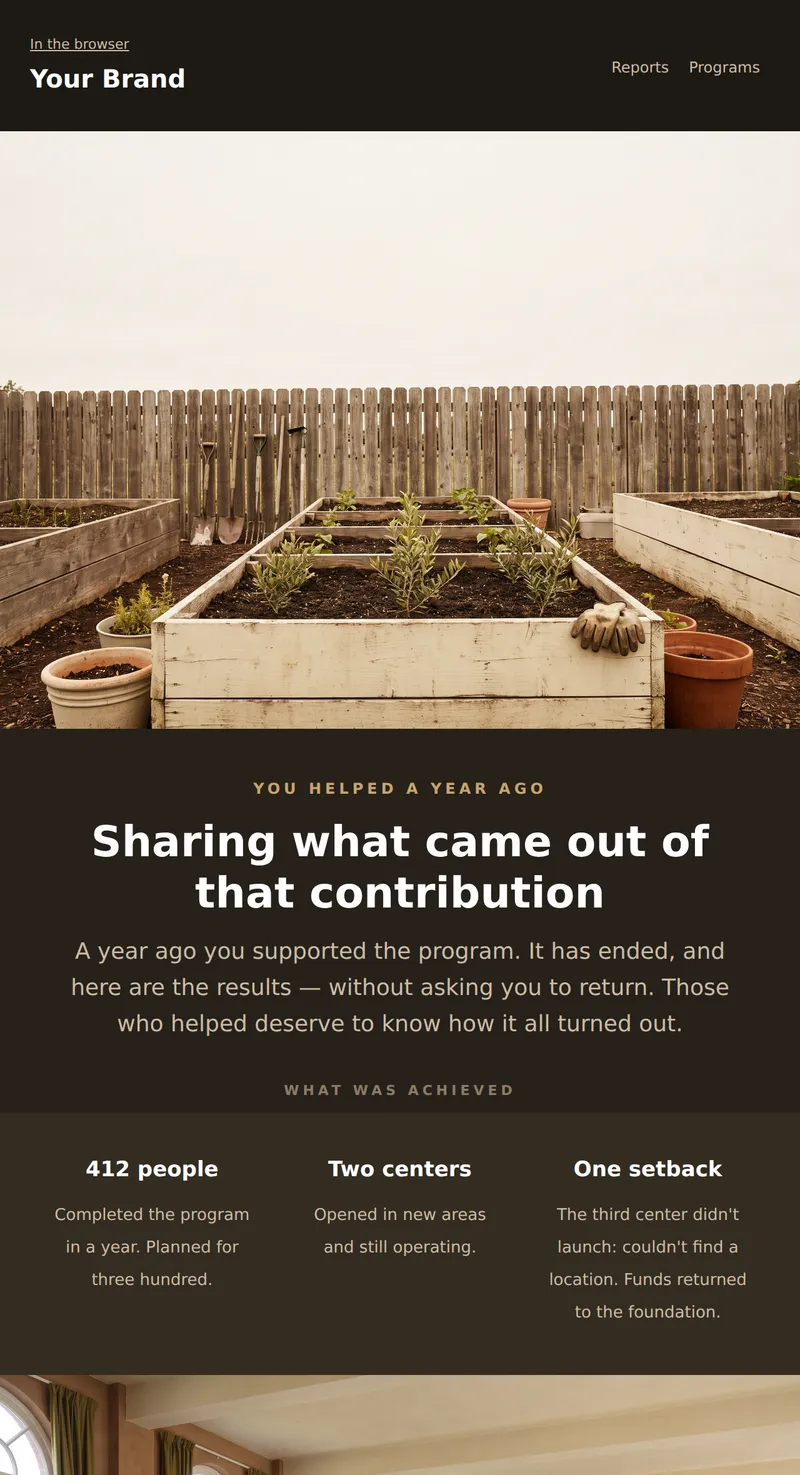
A heartfelt letter for those who helped a year ago: a report on what was achieved during this time, without asking to return.
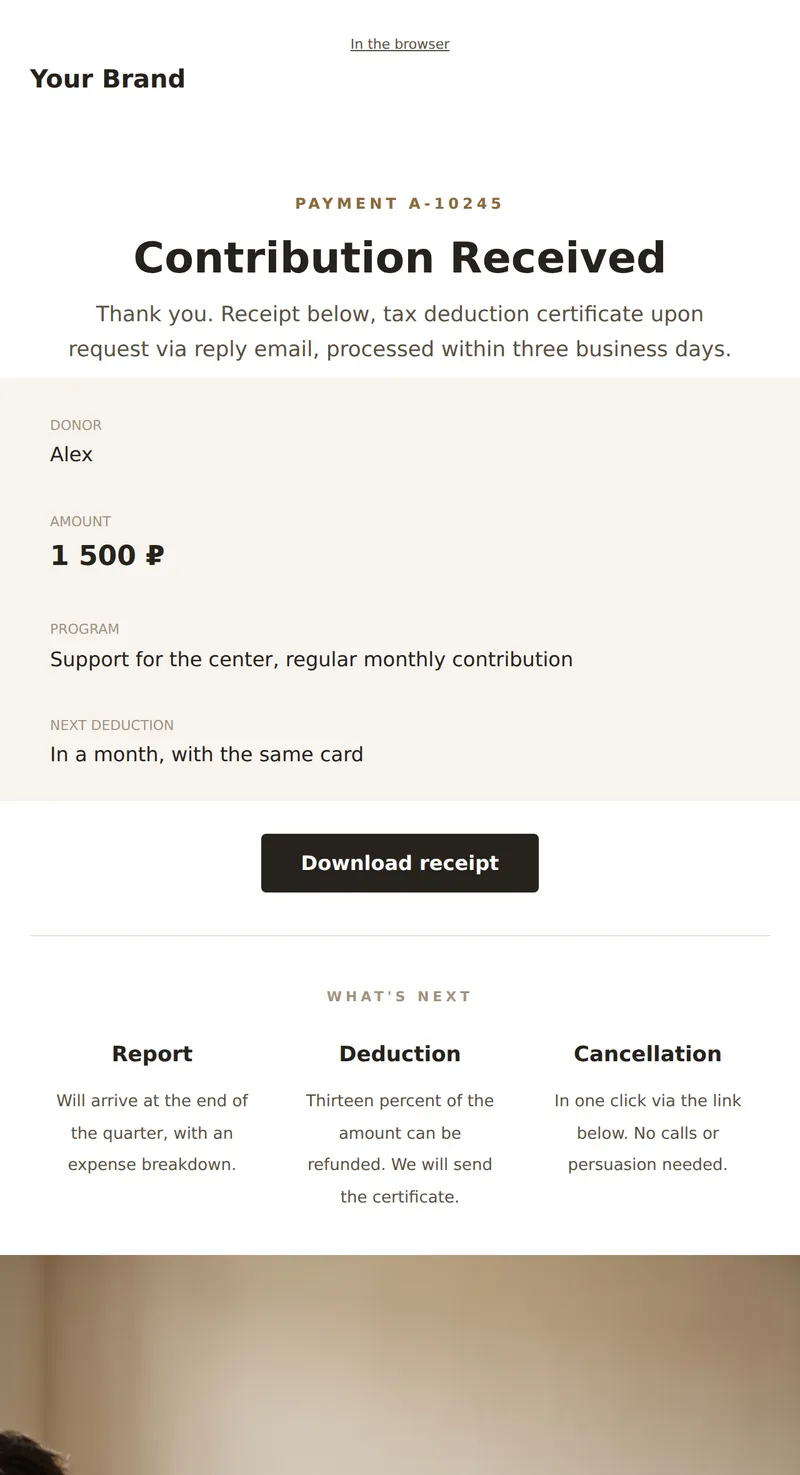
Service letter about contribution: amount, program, tax deduction document, and how to cancel a recurring payment.
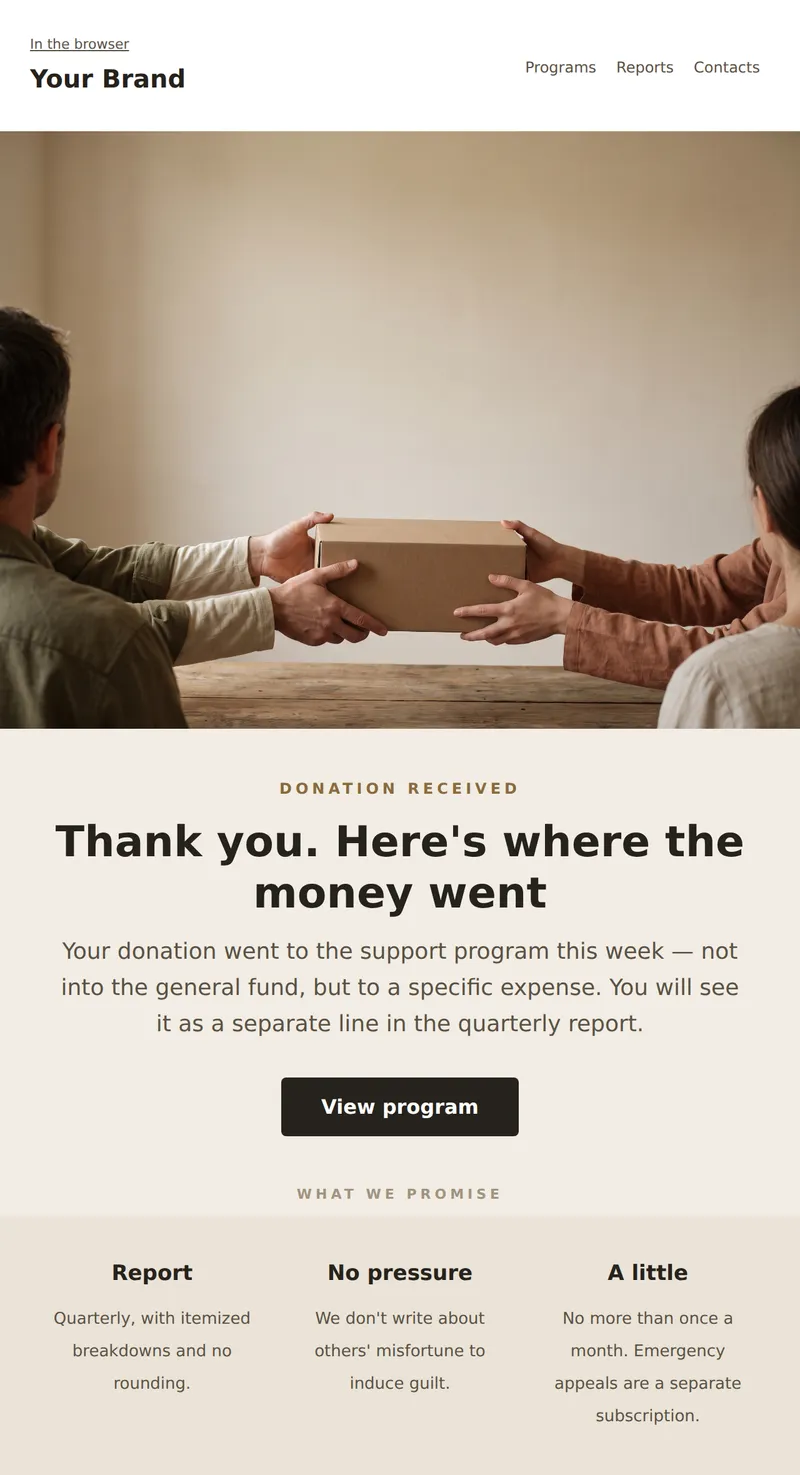
Foundation welcome letter: thank you without the fuss, where the first donation went, three promises on reporting.
Why these emails matter
Emails that lean on pity produce a spike and burn the list. Someone who gives under the weight of another person's suffering rarely becomes a regular donor: the emotion passes, but the guilt of not having given enough stays. So every template here is built on accountability rather than distress — how much was raised, where it went, what worked and what did not.
How to choose a template
Raising for a programme? The appeal template breaks the amounts down: not «please help» but «ten pounds buys a set of materials». Just received a first donation? The welcome email says exactly where that money went. Running a regular newsletter? The quarterly report, with figures. Three templates close the loop: failed payment, a report to lapsed donors, and a receipt with tax relief information.
Tips
- Show administrative costs honestly. A charity does not run without salaries and rent, and hiding that damages trust more than the numbers themselves.
- Write about what did not work, not only the wins. Admitting a failure is the strongest transparency signal available to you.
- Break amounts down into what they buy. «Thirty pounds is one session for a group» outperforms a slider of abstract numbers.
- Do not use photographs of people in distress. It is unfair to them and it performs worse: audiences have learned to recognise the technique.
- Make cancelling a recurring gift easy and say so. The fear of not being able to stop later is the main barrier to the first subscription.
Frequently asked questions
Are these templates free to use?
Yes. Open any template in the editor, replace the copy and images, then export the HTML or send it through your own provider.
Will the emails render correctly in Outlook?
Yes. The markup is table-based, with no flexbox or absolute positioning, and background images are duplicated in VML.
Why are there no photographs of beneficiaries in these templates?
A deliberate choice. Such images require consent from people in a vulnerable position, and campaigns built on them burn a list faster than they grow it. Volunteers, hands at work and community spaces carry the same message.
Do these work for a small initiative rather than a large charity?
Yes. Programmes become specific tasks, and the quarterly report matters even more for a small organisation: it is the main trust argument you have.