The Welcome Series: Three Emails That Decide a Subscriber’s Fate
Structure, timing and why automation outearns broadcasts
Mailvex · 9 August 2026 · 4 min read
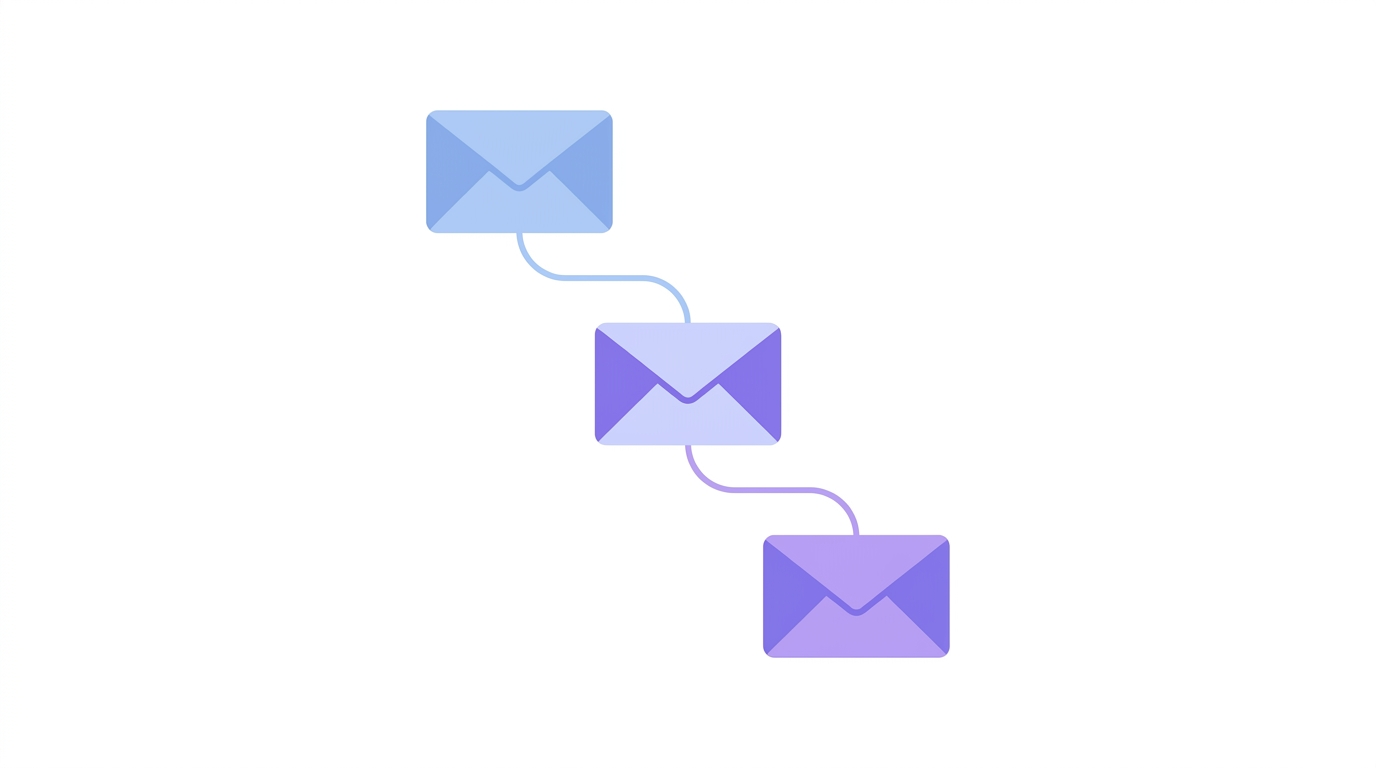
The first email of a welcome series goes out immediately after signup, the second after two days, the third after four or five. Automated flows deliver disproportionately: Klaviyo data across 183,000 brands puts them at roughly 41% of all email revenue from just 5.3% of sends. Below is how to structure the series and which numbers to watch.
Why a welcome series outperforms broadcasts
The difference between an automated email and a broadcast is not the design but the moment. A broadcast arrives when it suits the sender. An automated email arrives when the person has just taken a step towards you. With a signup, that is the peak of interest in the entire relationship.
41% of revenue from 5.3% of sends
Klaviyo: share of email revenue from automated flows, 183,000 brands
The revenue gap per email is starker still. Omnisend data puts an automated email at several dollars on average and a broadcast at cents.
$2.87 versus $0.07
Omnisend: revenue per automated email versus per broadcast
There is a third, less obvious argument. Nearly half of the revenue from automated flows comes from first-time buyers, against a third of that share for regular campaigns. Flows do not merely produce revenue — they convert new people into customers.
What to send and when
Three emails is the working minimum. More makes sense for complex products with a long decision cycle; fewer when the signup follows a purchase.
| When | Job | |
|---|---|---|
| First | immediately | confirm the signup, deliver what was promised, set the tone |
| Second | after 2 days | show the value: how the product works, what others choose |
| Third | after 4–5 days | give a reason to act: a selection, an offer, an invitation |
Count the intervals in reasons rather than days. If there is nothing to say, two emails beat three where the third exists to fill a slot.
Email one: confirm and deliver what was promised
The main failure of a first email is not delivering what the signup was for. If you promised a promo code, a discount or a file, it belongs in the very first email, prominently and without conditions. Everything else is secondary.
- whatever was promised at signup: code, file, access
- a short explanation of what you will write about and how often
- one link to the main action: catalogue, app, account
- a way to get in touch and a visible unsubscribe link
On unsubscribe specifically: a visible link in the first email reduces spam complaints. Someone who changed their mind is better off unsubscribing than hitting the spam button — the second reaction damages deliverability for your whole list.
Email two: show why you are useful
The second email solves a job people often skip: explaining why you matter to this person. Not telling them about the company, but showing how the product addresses their problem. The format depends on what you sell.
- for a store — a popular selection, reviews, shipping and returns terms
- for a service — a short explanation of where to start and one action
- for education — free material that is useful straight away
- for services — a walkthrough of a common case and its outcome
Email three: give a reason for a first purchase
The third email is the only one where a commercial offer belongs. By then the person has received what was promised and understands your value, so the offer does not read as pushy.
About open rate and why you cannot trust it
A trap catches almost everyone here. Comparing your open rate with published figures is currently meaningless.
The reason is Apple mail privacy protection: it loads email content automatically and an open is registered even when nobody saw the message. As a result the same email type shows 35% in one vendor report and 83% in another — the gap is entirely methodological.
35.53% opens, 2.11% conversion
Omnisend: welcome email performance, May 2026
The practical conclusion: measure clicks, orders and revenue per email. Keep open rate as a rough deliverability indicator — if it halves overnight, something happened to your inbox placement.
How to build the series
The Mailvex library includes welcome templates for ten industries: stores, fashion, real estate, online schools, beauty salons, food delivery and others. Each already contains a promo code block, a benefits block and a social footer.
Your brand kit applies to all three emails at once, so the series reads as a whole. Synced modules let you change a footer or header once and have it update everywhere.
Start from a ready welcome email template.
Browse the collectionFrequently asked questions
How many emails should a welcome series have?
Three is the working minimum for most cases. More is justified for complex products with a long decision cycle. The rule: every email must carry a distinct idea, otherwise shorten the series.
How soon should the first email go out?
Immediately, within minutes of signup. That is the peak of interest and any delay erodes it. If the email carries a promo code, a delay is also simply annoying.
Why is my open rate so different from industry figures?
Most likely methodology. Apple mail privacy protection registers opens automatically, so vendor figures differ several-fold. Compare yourself against your own trend rather than against someone else report.